Nylon Pipe for Compressed Air Distribution in Food Processing: How Hygienic Requirements Shape Selection
Compressed air can come into contact with packaging, food-contact surfaces, or exposed products in ways that are not immediately obvious. In food processing plants, the tubing that carries this air deserves careful evaluation because material composition, internal cleanliness, and operating conditions can affect the quality of the delivered air. Selecting a nylon pipe system involves more than checking pressure ratings and dimensions; manufacturers must also consider the air’s end use, the risk of contamination, and the requirements governing the specific production environment.
Defining Hygienic Requirements for Compressed Air
Not every compressed-air line in a food facility presents the same level of contamination risk. Air used to operate a pneumatic actuator outside the product zone has different implications from air blown directly onto food or used to clean a food-contact surface. The first step is to map where compressed air is released and determine whether it could contact exposed ingredients, packaging interiors, or equipment surfaces that touch food. This assessment establishes the appropriate level of material and air-quality control.
Material approval should reflect the intended application rather than a broad claim that a polymer is suitable for food processing. Where tubing may contact food or a food-contact surface, the relevant regulatory requirements depend on the jurisdiction, the type of contact, temperature, duration, and the substances that could migrate from the material. A supplier’s declaration, applicable compliance documentation, and supporting test information should be reviewed together. Approval for one use does not automatically establish suitability for every compressed-air application.
The tubing itself is only one part of the hygiene system. Oil carryover from compressors, moisture, corrosion in other components, and contaminated filters can compromise air quality even if the distribution tube is appropriate. Food processors should define the required air-quality specification according to the point of use and evaluate filtration, drying, drainage, and maintenance procedures accordingly. This system-level approach helps prevent an overly narrow purchasing decision based solely on pipe material.
Controlling Odour, Additives, and Material Migration
Unwanted odours can originate from polymer ingredients, processing residues, lubricants, cleaning chemicals, or contaminants introduced during installation. In sensitive production environments, an unfamiliar smell may prompt concern about whether the compressed air could affect a product’s sensory properties. Odour alone does not prove that a material is unsafe, just as the absence of a detectable smell does not establish compliance. Appropriate documentation and testing provide a more reliable basis for assessment.
Polyamide formulations can contain stabilizers, pigments, processing aids, and other additives that influence thermal performance, flexibility, and durability. Their suitability depends on the formulation and the conditions in which the tube will operate. Procurement teams should request information about the actual grade supplied, relevant declarations of conformity, and any restrictions on temperature or contact conditions. Generic statements about nylon as a material family are not a substitute for evaluating the specific formulation.
Cleaning and commissioning practices also influence early service performance. Cutting debris, dust, assembly lubricants, and residues from storage can enter a newly installed line if components are handled carelessly. Tubing should be stored in clean conditions, ends should remain protected before installation, and the system should be flushed and inspected according to the plant’s procedures before being placed into service. These measures address contamination introduced during handling rather than assuming the polymer alone determines cleanliness.
Comparing Industrial Tubing With Food-Related Applications
Standard industrial compressed-air tubing is commonly selected according to pressure, temperature, flexibility, chemical compatibility, and installation cost. Those criteria remain important in food plants, but hygiene-sensitive applications add further questions about material traceability, odour, extractables, cleaning compatibility, and the consequences of a leak or material failure. A tube that performs adequately in a general workshop may not have the documentation needed for use near exposed food.
Operating conditions should be checked against the actual system design. Pressure surges, compressor discharge temperature, cyclic bending, vibration, and exposure to cleaning agents can affect long-term performance. Nylon may provide useful mechanical strength and resistance to certain chemicals, but its properties vary by grade, and moisture absorption can influence dimensions and mechanical behavior. Engineers should confirm the operating envelope using manufacturer data and account for the fittings, seals, and other components connected to the tube.
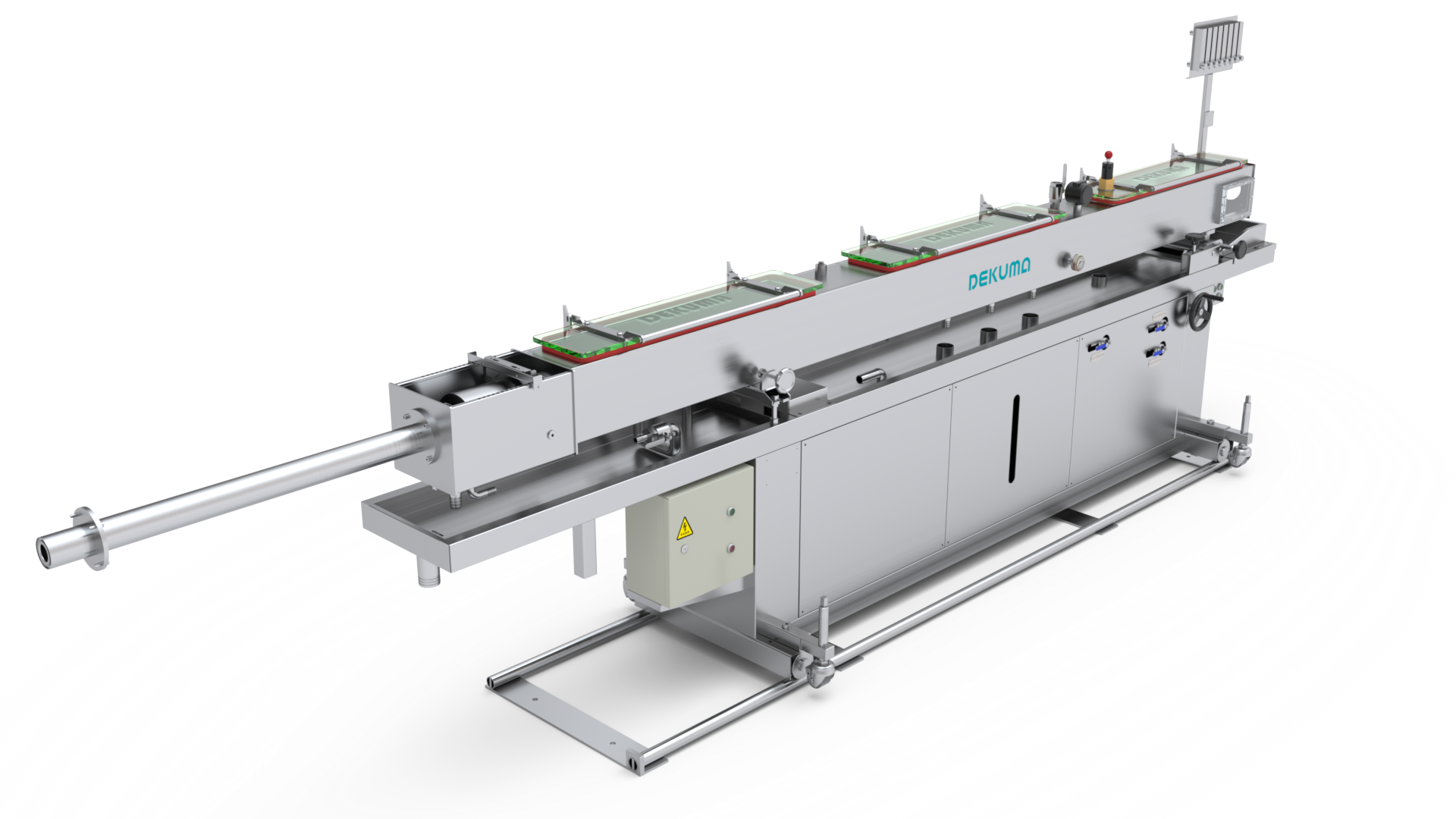
In applications that require multiple material layers, a composite tube may combine properties unattainable with a single polymer. The layer arrangement, however, must be assessed for compatibility with the intended air quality, pressure conditions, and any potential contact requirements. DEKUMA offers a Multi-layer Nylon Composite Tube Extrusion Line designed to process materials including PA and PP/PE for applications such as automotive brake, fuel, and air-conditioning lines. That equipment information illustrates the role of multilayer processing, but it does not by itself establish that a particular tube is approved for food-related compressed air; the finished product’s material documentation and application-specific validation remain necessary.
Conclusion
Hygienic compressed-air distribution depends on the interaction between tubing materials, air treatment, installation practices, and the point where air enters the production process. Food processors should distinguish direct or indirect food-contact risks from general pneumatic duties, verify the actual polymer formulation, and confirm compliance against the requirements of the intended application.
A nylon pipe system should be assessed through documented material properties and operating limits, while a composite tube requires additional attention to its individual layers and their compatibility. DEKUMA can be evaluated as an equipment supplier when specialized multilayer tubing is under consideration, but hygiene suitability must be demonstrated for the finished tube and its specific use rather than inferred from the extrusion machinery alone.