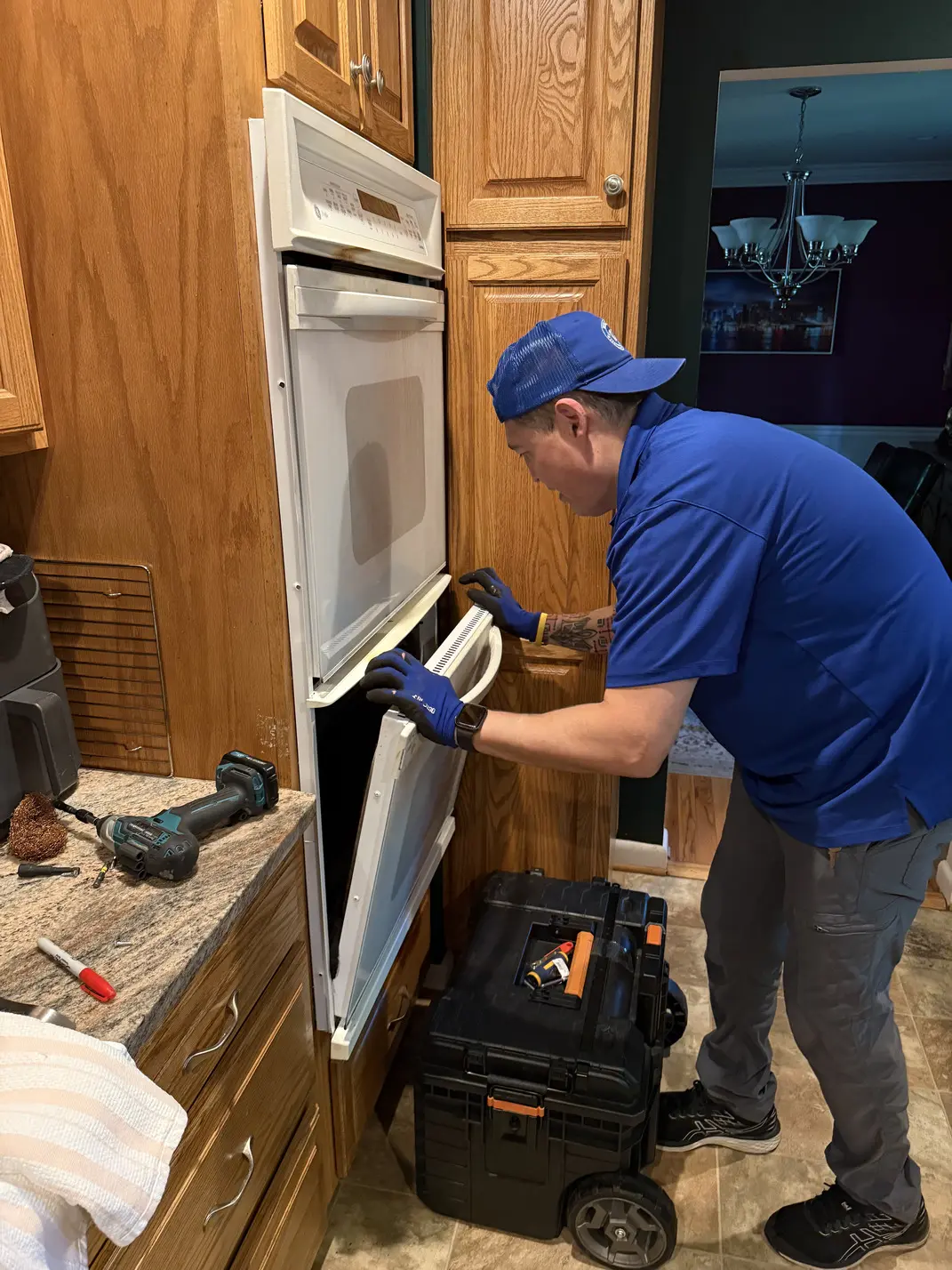
Oven Repair Services Near You
An oven that takes longer to preheat or repeatedly browns food on one side makes familiar recipes harder to rely on. The timing of the problem matters. An oven that never reaches the set temperature behaves differently from one that reaches it and then loses heat halfway through baking. Those details help a technician decide what to test first.
Describe which cooking mode is affected
If bake works but broil does not, mention which mode failed. The same applies to convection. On a double wall oven, note whether the issue affects the upper cavity, the lower cavity, or both. On a range, say whether the cooktop still works normally. These details help narrow the scope of the diagnosis before the technician arrives.
Also note whether the problem began suddenly or got worse over several weeks. Write down any error code, how long preheating usually takes now, and whether the display indicates that preheating is complete. A single uneven tray can have several explanations. A pattern that shows up across recipes and rack positions is more useful to report.
Plan the service visit around your oven type
Homeowners dealing with repeated heating, ignition, or control problems can start with InterTech’s Oven Repair Services Near You page. When calling, share the model number and specify whether you have a gas range, an electric wall oven, or a double oven. If you know whether the appliance has been repaired before, mention which part was replaced and whether the same symptom returned.
Describe what the oven did before describing what you think failed
The easiest starting point is a description of a familiar cooking task that changed. Perhaps a casserole used to finish within a reliable time and now takes much longer, or cookies repeatedly brown too quickly at the back of the same rack. Write down the selected mode, the set temperature, and what happened after preheating. If the same change appeared across several meals, explain what those meals had in common.
A single recipe leaves room for other explanations, such as a different pan or rack position. Repeated differences under similar conditions are more useful. Mention if the problem affects only baking, also affects broiling, or appears exclusively when convection is selected. If the display appears normal throughout, include that observation. A technician can use the pattern to decide which cooking functions to compare during a visit.
When preheating takes longer than usual
Separate the time shown or indicated by the oven from what you observe when cooking. For example, the oven might signal that preheating is complete even though familiar food still cooks much more slowly than before. Another oven might take longer to signal readiness but hold its usual performance once the meal is inside. Describe which of these patterns is closer to your experience and whether the change is consistent.
Preheat time depends on the particular oven and the settings selected. The most useful comparison is with the same appliance, under settings you use regularly. If you know how long your usual program used to take and how long it takes now, give both times. Include the approximate starting conditions and note whether you used the upper or lower cavity on a double oven. This gives the technician a reference point when deciding how to observe the appliance.
When food cooks unevenly across a tray
Describe where the differences show up. Food may brown more quickly at the back, cook slowly near the door, or behave differently when you move from one rack position to another. A photo of a tray can illustrate the pattern, particularly if you note which side faced the door. Mention whether the same pattern shows up when cooking something else with the same mode and rack placement.
The technician may ask about the pans, whether more than one rack was in use, and whether the selected mode normally circulates air. Those details provide context for the test. Explain what changed if you switched from conventional bake to convection, or from a large sheet pan to two smaller pans. A persistent problem across several ordinary cooking sessions is easier to evaluate than a single outcome with several variables changed at once.
A comparison of bake, broil, and convection
If you already know which modes operate normally, share that information along with the mode that seems faulty. A bake problem with a broiler that still functions is a narrower complaint than an oven that produces no heat in any mode. A fan sound that changes only on convection provides another distinct observation. The oven model determines which parts of the system each mode uses, so the difference is a clue the technician can follow during diagnosis.
Note how the problem presents in the affected mode. The oven might fail to begin heating, stop before it reaches the chosen temperature, or produce an error after operating for a while. Those descriptions point to different stages in the process. If an error shows on the display, capture the exact characters and the selected setting. Avoid guessing that two similar codes mean the same thing across different appliances.
Gas ranges and electric wall ovens call for different details
When booking, say whether the oven is part of a range with a cooktop or installed separately in a cabinet. If the range uses different fuel types for the cooktop and oven, mention the oven’s type if you know it. The full model number is useful when you are unsure. Exterior finishes and control panels can look similar even when the oven beneath them uses different components.
For a range, include whether the burners otherwise operate as expected if you already know. For a wall oven, describe whether it is a single unit, a double oven, or part of a combination with another appliance. Report the symptom in each affected section. That information helps the dispatcher understand whether the visit involves a standalone cooking appliance or equipment integrated into a larger installation. It also helps the technician plan for model-specific access.
What to record on a double oven
Use “upper” and “lower” in your description rather than referring to the oven generally. Note whether the issue appears when one cavity is used alone or only when both are already in use. If both cavities show different symptoms, describe each separately. For example, the upper oven might preheat at its usual pace but the lower oven might stop early and display a code. That gives the technician a clearer picture before testing begins.
If the cavities share a control panel, write down how the display identifies the affected oven. When sending a photo, show enough of the panel to make the selected cavity and program visible. Also say whether your usual cooking routine changed after the problem first appeared. If you switched most meals to the cavity that still works, that explains why you might have fewer recent observations about the other one.
Oven doors, hinges, and changes you can see from the kitchen
A door that sits unevenly or feels different when closing gives you something specific to report. Explain whether it closes to the same position on both sides and whether the change started after another event, such as a kitchen remodel or previous service. You can photograph the oven from the front and from an angle to show how the door sits in relation to the frame.
If the symptom is related to heat as well as the door, describe both and say which appeared first. A visible gap, a change in hinge motion, and a loose trim piece each give the technician different information. The exact model is useful because installation and door designs vary. If an island or adjoining cabinet restricts space in front of the oven, mention it when scheduling. The technician can use a wide photo to understand the working area.
Control panel issues and programs that stop early
Some ovens show a code when heating stops, while others return to the clock or leave the selected temperature on display. Record what you actually saw. If the panel responds normally until it reaches a certain point, describe the last step you could complete. Explain whether the issue happened only when the oven was already hot or also when beginning a program from room temperature.
If a timer or delayed start was set, include that information so the technician can separate programmed behavior from a recurring fault. A photo of the panel, the time elapsed, and the selected mode can be enough to build a useful timeline. If the display changed after a prior repair or installation, mention the date and what work was done. This gives the technician a starting point without assuming that the earlier work caused the current symptom.

Oven repair service in Montgomery County
InterTech’s oven page lists Bethesda, North Bethesda, Chevy Chase, Cabin John, Kensington, Silver Spring, Rockville, Potomac, North Potomac, Gaithersburg, Germantown, and Derwood. Start with the complete service address and ZIP code. Then share the appliance model and the feature that is causing trouble. For example, an upper wall oven that stops during convection is a more specific appointment request than an oven that does not cook evenly.
For an oven installed inside cabinetry, tell the scheduling team whether there are panels or trim around it. Include a wide photo if there is limited room to work near a kitchen island or counter. For a range, say whether it is freestanding or positioned between counters. These details apply regardless of the community. They describe the actual work environment and help the service team ask any questions about access before the visit.
Howard County oven repair appointments
The oven service page also lists Columbia, Ellicott City, Fulton, and Clarksville. When scheduling from Howard County, note any deadline that affects the appointment, such as planned cooking for a gathering. The service company can explain appointment availability and whether the initial visit is for diagnosis or could include a repair if the issue and required parts are known. If a specific part has to be ordered, ask how the follow-up will be arranged.
You can prepare for the first visit by writing a short description of what works and what fails. A homeowner might say the lower oven works, the upper oven stops during preheat, and the display shows an error at that point. Add the model number and any access notes. That concise description is enough to start the conversation about what a technician will inspect and what you need from the appointment.
Oven repair in Washington, DC and Northern Virginia
Washington, DC appears on the service page alongside the Northern Virginia locations of Arlington, Alexandria, McLean, Tysons, Falls Church, and Reston. Confirm coverage with the complete address. If the oven is in a managed property, ask who arranges entry and whether an appliance visit requires a service elevator or loading entrance. Supply the unit number and a contact who can answer questions when the technician arrives.
For a rental property, establish who can approve a repair and whether the estimate must be sent to a property manager. A tenant who experienced the problem can provide a description and photos even if someone else authorizes the work. If more than one person has used the appliance since the issue began, collect their observations separately. That preserves differences in cooking mode or cavity that might otherwise get lost in a combined account.

What to expect from an oven diagnosis
The technician will use the model and the reported behavior to choose which functions to examine. The work might involve observing preheat, comparing selected modes, or checking which part of a double oven is affected. If the problem depends on an extended cooking session, say how long it usually takes to appear. This helps the technician decide how to structure testing and what can reasonably be established during the appointment.
Ask how the findings relate to your symptoms. If the proposed repair addresses a function that stopped working, ask what result the technician expects after it is complete. If you raised two problems, find out whether the estimate covers both or whether one will be assessed separately. A written description of the confirmed fault and proposed work can make the next decision clearer, especially when an oven has been repaired before or is part of a larger built-in unit.
Reading the estimate and comparing the cost of replacement
Review the scope of work, parts, labor, and the terms for any return visit. If the price depends on the availability of a specific component, ask how it will be confirmed and when you will receive an update. If the technician identifies another concern during the diagnosis, ask whether it must be addressed to restore the affected mode or can be considered separately. That gives you a clearer basis for approving work.
When comparing with replacement, account for installation and fit. A new wall oven may have different dimensions or installation requirements even when its advertised size sounds familiar. For a range, consider the fit with adjacent counters and the existing connections. The age and history of the appliance are useful alongside those costs. A well-understood fault in an oven that otherwise fits your kitchen presents a different decision from a series of recurring issues that have already required multiple visits.
After the service visit
Keep the invoice, the model number, and the written description of the work. When you return to normal cooking, compare results from a familiar program and a recipe you know well. If the service involved one cavity or cooking mode, make a note of which one changed. This gives you a reference if you later need to report another symptom or compare the oven’s performance across modes.
For a follow-up request, explain what was restored and what remains. An example would be that the oven now completes preheat, but the upper cavity still ends convection early. Include the last service date and the exact message if one appeared. That gives the service team more context than starting over with a general complaint. Keep any model-specific instructions you received along with the estimate and invoice, so the person who uses the oven can refer to them later.
Can an oven be diagnosed if the problem comes and goes?
An intermittent issue can still provide a useful pattern. Write down whether it occurs from a cold start, after a second round of cooking, or after the oven has operated for a certain length of time. Keep the selected mode and temperature with each example. Include the most recent occasion when the oven worked normally. The contrast may show the technician that a problem depends on an operating condition rather than being present every time.
For a holiday or weekend meal, more than one person may be using the oven and changing settings. Collect their observations separately so the technician can tell which symptoms belong to which mode. If an older service invoice describes a similar issue, keep it available for comparison. An exact date is helpful when you have it, but even an approximate month and a record of the work can help identify whether a symptom repeated after an earlier repair.
Book a local service visit
For a built-in oven, ask whether cabinet access affects the diagnostic visit and how the company handles parts availability for your model. To check local coverage, check the service areas listed on InterTech’s homepage for appliance repair service Maryland, Washington DC, and Virginia.